Outpatient Rehabilitation
Therapy services
At Penn State Health Rehabilitation Hospital, our comprehensive approach to rehabilitation provides continuity of care from inpatient to outpatient settings. We offer therapy and other clinical services, as well as specialized programs to meet your needs, interests and goals. Below is a list of therapy services offered at our outpatient center.
-
Occupational therapy helps develop the skills required for basic, everyday life and, ultimately, work. Our occupational therapists use a patient-centered approach to address functional, cognitive and visual weaknesses. We employ evidence-based techniques and advanced technologies — functional electrical stimulation and virtual reality — to help patients achieve as much independence as possible.
Our therapists develop custom treatment plans that meet your individual needs following neurologic conditions, such as stroke or traumatic brain injury, as well as limb loss, orthopedic and medically complex conditions.
-
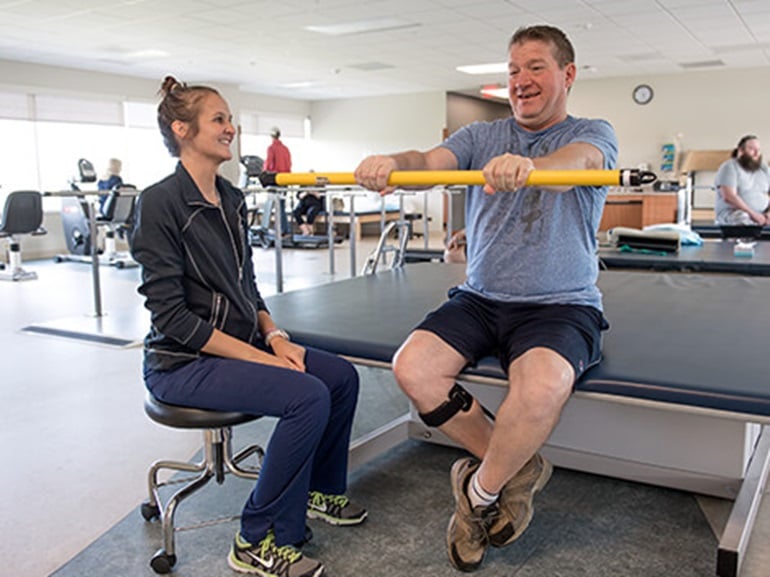
Our individualized, physical therapy treatment services help optimize muscle control, balance, flexibility and mobility while also building strength and endurance.
Our highly trained physical therapists evaluate and treat the complex physical and functional challenges that result from spinal cord, orthopedic and brain injuries, strokes, amputations, musculoskeletal conditions and neurologic disorders.
In addition, physical therapy is effective in treating a wide range of conditions that result from sports- or work-related injuries as well as strains and sprains; muscle, tendon and ligament tears; arthritis; bursitis; tendonitis; joint inflammation; and fractures.
-
If you are experiencing problems with communication, language, cognition and/or swallowing, you may benefit from speech therapy services and the specialized attention offered at Penn State Health Rehabilitation Hospital. Our certified, speech-language pathologists diagnose and treat a wide variety of disorders resulting from stroke, brain injury, cancer or neurological conditions, including Parkinson's disease and multiple sclerosis.
Speech therapy usually involves individual or group training and education to help you overcome or compensate for any difficulties. Our speech professionals have experience in treating a wide spectrum of disorders, including:
- Aphasia — Impaired or absent comprehension and/or communication skills that result from an injury to the brain's language center. Aphasia can apply to spoken or written words and numbers and is commonly associated with stroke and brain injury.
- Apraxia — An inability to execute purposeful, coordinated body movements even though muscular strength and mental capacity remain intact.
- Dysarthria — Difficulty in articulating words due to a disturbance in the central nervous system. Speech is characteristically slow and slurred. It is commonly associated with stroke and traumatic brain injury. Treatment involves intensive speech therapy focusing on oral-motor skill development.
- Dysphagia — Limited ability to swallow food, liquids and even saliva due to muscle weakness or paralysis. Dysphagia is commonly associated with stroke, traumatic brain injury or spinal cord injury. While eating or drinking, individuals may experience mild to severe difficulties such as coughing, choking or throat-clearing.
- Cognitive impairment — Usually results from brain injury or a stroke and typically causes difficulty with attention to tasks, memory, reasoning, problem solving and executive functioning, such as goal setting, planning, initiating, self-awareness, self-monitoring and evaluation.
- Voice disorders — Characterized by abnormal production and/or absence of vocal quality, pitch, loudness, resonance and/or duration, which is inappropriate for an individual’s age or gender.
We also offer Lee Silverman Voice Treatment – LSVT LOUD®. A program used to treat soft, monotone, hoarse voice quality and imprecise articulation, together with lessened facial expression seen in patients with Parkinson’s disease. It is proven to be effective in restoring oral communication in individuals with Parkinson’s and other conditions beyond what current pharmacological and surgical interventions can offer.
The LSVT LOUD® approach centers on a specific therapeutic target: increased vocal loudness. This key target acts as a trigger to increase effort and coordination across the speech-production system.
-
Lymphedema is a chronic lymphatic disease that occurs when any part of the lymphatic system is damaged, causing swelling in another part of the body. Causes include:
- Surgery used to treat cancer, such as a mastectomy or lymph node removal
- Radiation therapy
- Other disease processes such as peripheral vascular disease
Symptoms of lymphedema can include feelings of fullness, heaviness, aches or discomfort, obvious swelling in a part of the body, skin changes or tightness with swelling. People usually notice this when clothing or jewelry doesn’t seem to fit the same or is too tight over a particular area. These symptoms may affect mobility or the ability to perform activities of daily living or work responsibilities.
Penn State Health Rehabilitation Hospital delivers high-level care in managing lymphedema. Our therapists receive specialized training and are skilled in decongestive therapy, which is used to manage all stages of lymphedema in any part of the body.
Decongestive therapy includes:
- Manual lymph drainage — a highly specialized technique to redirect the flow of the lymph (fluid) to unaffected areas of the lymphatic system
- Decongestive exercises
- Skin care for the affected area or Areas
- Multi-layer compression bandaging — use of short, stretch bandages to effectively manage later-stage lymphedema
- Compression garment fitting and selection
- Education on lymphedema prevention and risk reduction
-
When dealing with a nervous system issue or a neurological disease, it’s best to reach out to rehabilitative specialists who can offer holistic treatment. They will collaborate with your primary care providers, neurological specialists and you and your family members to improve your abilities and well-being.
Neurologic conditions present differently as time progresses, and our therapists will be there throughout your journey to act as your coaches for care.
- Physical therapists focus on restoring and maintaining your ability to move and complete physical tasks. They treat patients with neurologic diseases and/or injuries that create pain, loss of strength, diminished range of motion or balance/coordination issues.
- Occupational therapists play a vital role in assessing and assisting patients as they perform daily tasks such as eating, dressing, toileting and bathing. They work closely with patients to help them be as independent as possible.
- Speech-language pathologists treat patients who have problems with speech and cognitive skills, including those who have suffered strokes, brain injuries or other changes to the nervous system. Speech-language pathologists also work with patients who have difficulty swallowing.
Neurological conditions can impact life’s daily activities. But with our clinicians’ skills and specialized training, we can help you return to your highest level of function and make the most of the moments that matter to you.
Outpatient programs
Below are the specialized programs offered at our outpatient center.
-
Fighting cancer takes a toll on your body. Up to 90% of those receiving cancer treatments have at least one side effect, including pain, fatigue, difficulty with memory and concentration and mobility issues. Cancer rehabilitation can help you prepare for treatment and maintain strength throughout your survivorship journey so you can achieve your goals.
Penn State Health Rehabilitation Hospital’s outpatient center offers specialized cancer rehabilitation services. Our therapists receive extensive training in oncology rehabilitation and understand the unique challenges patients face while undergoing cancer treatments.
We comprehensively care for you throughout your cancer journey by focusing on the functional side effects impacting your health and improving your well-being and ability to live your everyday life. As part of your individualized care plan, you may find yourself taking part in physical, occupational, speech and/or cognitive therapies.
We work closely with your physician and cancer team throughout care so everyone is working together for you.
Click here to find out more about the cancer rehabilitation program or call (717) 833-5300 today.
-
The comprehensive Neuro Day Program at Penn State Health Rehabilitation Hospital’s outpatient center offers the advantages of living at home while receiving the benefits of a full-day rehabilitation program with a comprehensive, interdisciplinary approach to recovery.
The program’s goal is to maximize personal and functional independence in order to re-establish a daily routine and, ultimately, allow you to actively participate in community and life roles. The program is geared to patients who will benefit from high-intensity rehabilitation services, but do not require 24-hour nursing care in a hospital setting.
The following guidelines are used by the clinical team to help determine an individual’s appropriateness for admission into the program:
- Referral for at least two disciplines of therapy (any combination of physical, occupational or speech therapies)
- Goals to achieve independent functioning in the community
- Ability to tolerate six hours of activity per day
- Ability to attend the program Monday through Thursday
In addition to physical, occupational and speech therapy, our program includes recreational therapy, group treatment, community outings and independent work time.
During recreational therapy, your therapists will work with you on meeting your goals regarding community reintegration and participation in leisure and recreational activities.
Group treatment includes working with other patients on functional tasks or projects based on each participant’s goals. Groups can be cognitive-based and/or physical-based and include:
- Meal planning
- Cooking
- Community outing planning
- Problem-solving activities and games
Community outings allow you to practice skills and strategies learned in physical, occupational, speech and/or recreational therapy while participating in activities such as:
- Grocery shopping
- Visiting a park or community center
- Playing miniature golf or bowling
- Going to a local museum
- Working out at a fitness center
Independent work time includes activities to help establish independence based on personal needs and goals, such as:
- Use of exercise equipment
- Functional electrical stimulation (FES) bike/Bioness®
- Self-stretching or strengthening exercises
- Speech therapy homework or worksheets
- Therapeutic rest time
The Neuro Day Program may be the first step in your rehabilitation or the next step in your continuum of care as you transition from hospital to home. Either way, we’re here to help.
-
Our limb loss program focuses on building skills to create independence within your home, work and community activities. Through personalized treatment, exercise plans and hands-on physical rehabilitation, we prepare you for reintegration into everyday life with trusted and comprehensive care.
Our compassionate therapists understand the challenges associated with amputation. We work closely with you to help restore strength, confidence and mobility. Our team helps you increase activities safely and decrease pain to transition to an independent and active lifestyle.
We provide services in all phases of recovery:
- Pre-prosthetic (after surgery)
- Inpatient rehabilitation assessments
- Prosthetic training
- Return to work and/or recreational activities
Treatment may include:
- Mobility and self-care
- Residual-limb care
- Prosthetic management
- Walking and balance training
- Community reintegration skills
- Pain management
- Adaptive equipment recommendations
Along the way, we will communicate with your physician, prosthetist and support system to ensure seamless and coordinated care.
-
The ability to operate a vehicle safely can be directly impacted by medical conditions and aging. If you or your family member are experiencing or recovering from a medical condition that has affected your physical strength, balance, response time, upper-body range of motion, cognitive skills and more, you can be assessed to determine if it is safe for you to drive.
Through our assessments, our occupational therapists help your physician make important decisions about your safety on the road.
This driver risk assessment program is only available through a provider referral. We partner with your primary care practitioner in providing results after an on-site evaluation of skills.
Our occupational therapist will work one-on-one with you to:
- Objectively evaluate physical ability, visual function and cognitive performance.
- Identify areas of potential concern.
- Provide education on the full scope of skills required for driving.
Results of your assessment are shared with the referring practitioner, who then works with you on making decisions about returning to driving.
-
Double-jointed is a common phrase heard when someone is overly flexible. However, this unique trait can be an indication of something more serious when muscles and joints move more freely than they should. Ehlers-Danlos syndrome (EDS) is one such condition where too much flexibility can impact daily life in a way that can feel debilitating.
Our licensed clinical experts can help manage EDS and minimize its impact on your life.
EDS can look different for each person, and while it is a lifelong condition, physical therapy can give you the guidance needed to manage symptoms. Our experts address symptoms from a physical, emotional and mental perspective, giving you the necessary tools to take control of the condition and its impact on your life. Our team works with you to reach functional goals catered to your needs.
Need rehabilitation? Let us help.
From inpatient to outpatient, Penn State Health Rehabilitation Hospital offers the care and treatment, programs and services to meet your needs. Please contact the outpatient center at (717) 833-5300 with questions or to schedule an appointment. You can also fill out the form below.